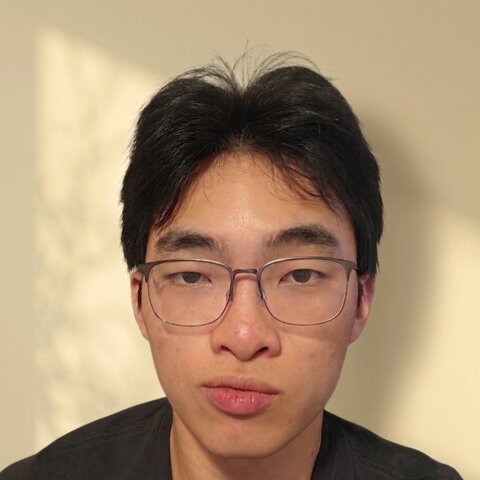
Eric Xu
Machine learning for forecasting rare weather extremes weeks ahead, and the GPU pipelines that run it.
M.S. student, Scientific Computing and Applied Mathematics
UC Santa Cruz, expected June 2027
ericxu1070@gmail.com
GitHub · LinkedIn · Resume (PDF) · CV (PDF)
Brief bio
In the TACS Lab at UC Santa Cruz, advised by Prof. Ashesh Chattopadhyay, I adapt rare-event sampling to ensembles of AI weather models, to forecast heat waves and cold outbreaks 3 to 4 weeks ahead. As a part-time ML researcher at Vayuh.ai, I make those ensembles cheaper to run on GPUs. I am an M.S. student in Scientific Computing and Applied Mathematics at UC Santa Cruz (Plan I thesis, expected June 2027), after a B.S. in Applied Mathematics there in 2026 with Highest Honors in the Major.
I am applying to PhD programs for Fall 2027 and to machine learning and quantitative research roles starting in 2027.
Research
- Undergraduate and Graduate Researcher, TACS Lab (Sep 2025 – present)
Adapting the AI+RES rare-event sampling algorithm (Lancelin et al., 2025) to weather forecasts 3 to 4 weeks ahead. The method clones and prunes ensembles of AI weather models (FourCastNet 3, GenCast) by forecast score to oversample rare heat waves and cold outbreaks. Built the batch pipeline (JAX, PyTorch; Slurm on H100 nodes, PBS on NCAR Derecho) that launches ensembles weeks before past US extremes and backtests them against historical observations (ERA5). The code is a private lab repository. - ML Researcher (part-time), Vayuh.ai (Jul 2026 – present)
Put the AI+RES rare-event sampling algorithm into production for extreme-weather forecasts 3 to 4 weeks ahead. Benchmarked GenCast, FourCastNet 3, and SFNO in different ensemble configurations on H100 nodes and cut compute per forecast case about 27x (33.5 to 1.23 H100-hours). Profiled runs with NVIDIA Nsight and nvidia-smi to find the slowest stages and GPU kernels, then optimized them.
Interests: scientific machine learning, data assimilation, rare-event sampling, machine learning for weather and climate, dynamical systems.
Projects
- Council of Sumer (2026) [code]
A council of five LLM agents with conflicting goals, built at the UCSC AI Hackathon @ SF Tech Week (team of 3). The agents run as separate processes, debate over AGNTCY SLIM, and vote on each year's plan in the 1968 city-management game Hamurabi, with runoffs and a human tie-break on deadlock. I co-wrote the deliberation engine and the benchmark; over 16 seeded games, the council survived 11 of 15 scored reigns, against 9 of 16 for a single LLM, and starved 27% fewer people. - Cross-Species Transfer Learning with DeepSEA (2026) [code]
Fine-tunes the human-trained DeepSEA genomic sequence model on mouse ENCODE data. Fine-tuning beat training from scratch on 115 of 133 chromatin features (median AUROC 0.877 vs 0.865) and reached its best validation loss in 5 epochs, against 12 from scratch. - 4D-Var Data Assimilation with a Learned Inverse Operator (2026) [code]
AM 170B capstone, team of 5. Frerix et al. (ICML 2021) learn an inverse observation operator to make 4D-Var easier to optimize. I wrote most of our PyTorch port of their JAX code and reproduced the Lorenz-96 results. We then extended the paper with the full 4D-Var cost, noisy observations, and sliding-window cycling; I studied gradient blow-up over long assimilation windows and ran the sliding-window experiments on Lorenz-96 and 2D Kolmogorov flow.
Education
- M.S. Scientific Computing and Applied Mathematics, UC Santa Cruz (expected June 2027)
Plan I (thesis). Advisor: Prof. Ashesh Chattopadhyay. - B.S. Applied Mathematics, UC Santa Cruz (2024 – 2026)
Highest Honors in the Major. GPA 3.77 / 4.00. Dean's Honors, 4 quarters.
Relevant coursework: Scientific Machine Learning (AM 261), Applied Dynamical Systems (AM 224), Numerical Linear Algebra (AM 213A, in progress), GPU Programming (AM 148), Probability and Statistics (CSE 107), Classical and Bayesian Inference (STAT 132), Financial Mathematics (MATH 114).
Teaching
- Teaching Assistant, Baskin School of Engineering (Fall 2026)
AM 20 Ordinary Differential Equations for Engineers; AM 11A Mathematical Methods for Economists I. Weekly discussion sections and office hours. - Tutor and Reader, Baskin School of Engineering (Fall 2025 – Spring 2026)
AM 10 Mathematical Methods I (Linear Algebra), 3 consecutive quarters. Reader for CSE 16 Applied Discrete Mathematics; tutor for MATH 19B Calculus II.
Skills
Programming: Python (primary), C++ (working knowledge), MATLAB, R, Bash
Machine learning and scientific computing: PyTorch, JAX, NumPy, scikit-learn
HPC and tools: Slurm, PBS, NCAR Derecho, H100 nodes, Linux, Git, SSH
Familiar from coursework: Triton (GPU kernels)
Mathematical areas: Linear algebra, differential equations, PDEs, dynamical systems, numerical methods, optimization, inverse problems, probability and statistics
Coursework
Mathematics and numerics
| AM 10 | Linear Algebra |
| AM 20, 100 | Mathematical Methods II-III |
| AM 112 | Intro to PDEs |
| AM 114 | Dynamical Systems |
| AM 129 | Scientific Computing |
| AM 147 | Computational Methods |
| AM 170A/B | Mathematical Modeling I-II |
| AM 213A | Numerical Linear Algebra (graduate, in progress) |
| AM 224 | Applied Dynamical Systems (graduate) |
| CSE 16 | Applied Discrete Mathematics |
Probability, statistics and finance
| CSE 107 | Probability and Statistics |
| STAT 132 | Classical and Bayesian Inference |
| MATH 114 | Financial Mathematics |
Machine learning and computing
| AM 148 | GPU Programming |
| AM 234 | ML and AI in Genomics (graduate) |
| AM 261 | Scientific Machine Learning (graduate) |
| CSE 12 | Computer Systems and Assembly |